Endoscopic Spine Surgery
Among the least invasive forms of spine surgery: a high-definition camera and instruments through incisions of just 7 to 10 mm, preserving the muscles that support the spine.

Erick R. Kazarian, MD
A Specialty Focus
Among the least invasive forms of spine surgery available today. Using a high-definition camera and instruments passed through two incisions of just 7 to 10 millimeters, Dr. Kazarian treats disc herniations, stenosis, and nerve compression in the neck and back without cutting the muscles that support your spine.
Most patients walk within hours, go home the same day, and measure recovery in weeks, not months.
7–10 mm
incisions, smaller than a dime
Same day
discharge for most patients
Muscle-sparing
access: muscles are dilated through natural planes rather than cut
Weeks
to recovery, not months
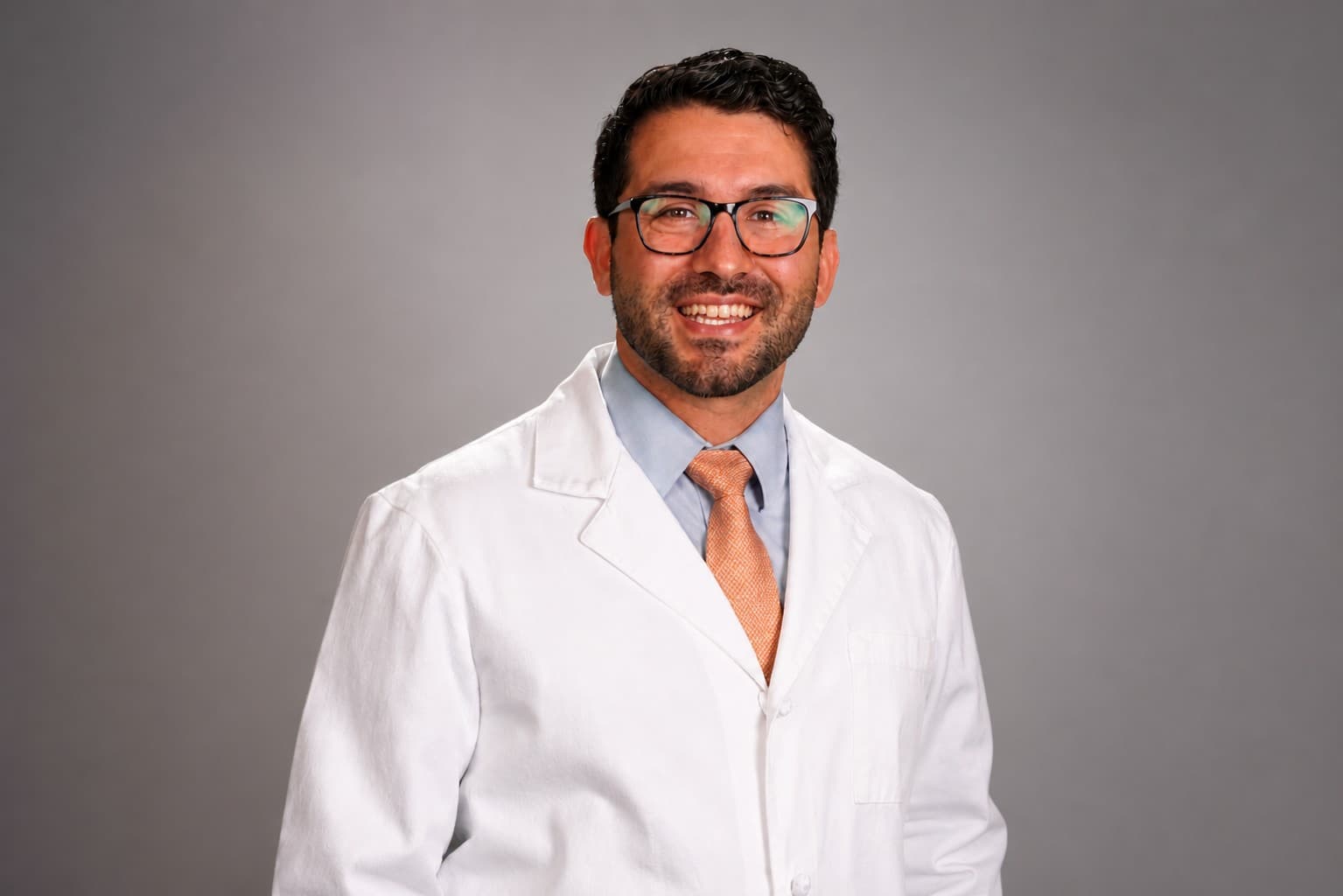
About
Dr. Erick R. Kazarian is a board-certified orthopedic spine surgeon at NYU Langone Health and a Clinical Assistant Professor in the Department of Orthopedic Surgery at NYU Grossman School of Medicine. He specializes in degenerative, sports-related, and traumatic conditions of the cervical, thoracic, and lumbar spine, with a focus on endoscopic, robotic, and motion-preserving techniques, and is the lead author of a peer-reviewed primer on endoscopic spine surgery in The Spine Journal.
Meet Dr. KazarianSpecialties
Among the least invasive forms of spine surgery: a high-definition camera and instruments through incisions of just 7 to 10 mm, preserving the muscles that support the spine.
Advanced techniques that minimize incision size and muscle disruption for faster recovery.
Procedures designed to maintain spinal mobility while addressing underlying pathology.
Treatment of neck disorders including disc herniations, stenosis, and degenerative disease.
Management of lower back conditions including sciatica, spondylolisthesis, and stenosis.
Surgical management of spinal fractures and traumatic injuries.
Conditions
A lumbar disc herniation occurs when a disc in the lower back pushes through its outer ring and presses on a spinal nerve, most often producing leg pain (sciatica), numbness, or weakness.
A cervical disc herniation occurs when a disc in the neck pushes through its outer ring and presses on a spinal nerve, producing neck pain plus radiating symptoms into the shoulder, arm, or hand.
Spinal stenosis is a narrowing of the spinal canal that compresses the spinal cord or nerve roots, producing leg pain, walking limitation, and, in cervical cases, hand and balance problems.
Sciatica is leg pain caused by irritation or compression of a lumbar nerve root, most often from a herniated disc or spinal stenosis. It is a symptom, not a diagnosis, and the underlying cause guides treatment.
Cervical radiculopathy, a 'pinched nerve' in the neck, produces pain, numbness, or weakness that radiates from the neck into the shoulder, arm, or hand along the path of the affected nerve.
Spondylolisthesis is a condition in which one vertebra slips forward over the one below it, sometimes producing back pain, leg pain, and instability, though many patients have minimal or no symptoms.
Procedures
Endoscopic spine surgery is among the least invasive ways to address disc herniations and spinal stenosis in the lumbar spine.
A next-generation lumbar fusion that combines the structural goals of a traditional TLIF with the tissue-sparing advantages of endoscopic surgery.
A motion-preserving endoscopic procedure that relieves pressure on a pinched nerve in the neck through two small incisions, without fusion or implants.
A well-established procedure to relieve neck and arm pain from a damaged or herniated cervical disc.
A motion-preserving alternative to fusion that replaces a damaged cervical disc with an artificial implant designed to mimic natural neck movement.
Permanently joins two or more vertebrae in the lower back to eliminate painful motion and restore spinal stability.
Patient Reviews
“Dr. Erick Kazarian and his team at NYU Langone provided exceptional care. I underwent surgery to address two herniated discs in my neck, and from consultation through recovery I felt completely supported and informed. Dr. Kazarian has a truly warm and caring nature. He took the time to explain everything clearly and made me feel calm and not scared going into surgery, which meant so much. Today my neck is better than ever, and I am able to do all the activities I love, from horseback riding to spinning. My outcome has been truly life-changing, and I am incredibly grateful for his expertise and compassion. I would highly recommend him to anyone needing spine surgery.”
“Every encounter with Dr. Kazarian and his staff - both at the office and at the hospital - went above and beyond my expectations. In particular, he listened to me carefully, I didn't feel at all rushed, he answered my questions patiently and completely, and, best of all, he fixed my spine!”
Locations
Dr. Kazarian sees patients in Midtown East, the Penn District, and Tarrytown. Appointments can be booked directly through NYU Langone.
Book Appointment